 Canada (English)
 Colombia
 Caribbean and Puerto Rico
 Ecuador
 India
India
 Indonesia
 Ireland
 Malaysia
 Mexico
 Panama
 Peru
Peru
 Philippines
 Singapore
 South Africa
 Sri Lanka
 Thailand
 United Kingdom
 United States
A modular suite of tools that grow and evolve with you

-
English
-
English
-
 AcumatiCares



Product
Multi-Entity and Intercompany Accounting Software
Manage accounting, intercompany transactions, and financial reporting across multiple business entities with Acumatica multi-entity accounting software. Automate financial processes and gain real-time visibility into entity-level and consolidated performance.
Centralize operations and automate financials across multiple business entities
Acumatica empowers you to create and manage unlimited companies within a single environment. Share charts of accounts, automate intercompany transactions, and generate consolidated reports to drive faster decision-making.
Designed for flexibility
click the icon to learn more
Product highlights
Our multicompany ERP supports complex organizational structures, enabling finance teams to manage unlimited entities, currencies, and locations from a single, secure cloud platform.
Unify your business
Intercompany transactions
Multicurrency & multilingual
Financial consolidation
Unify your business
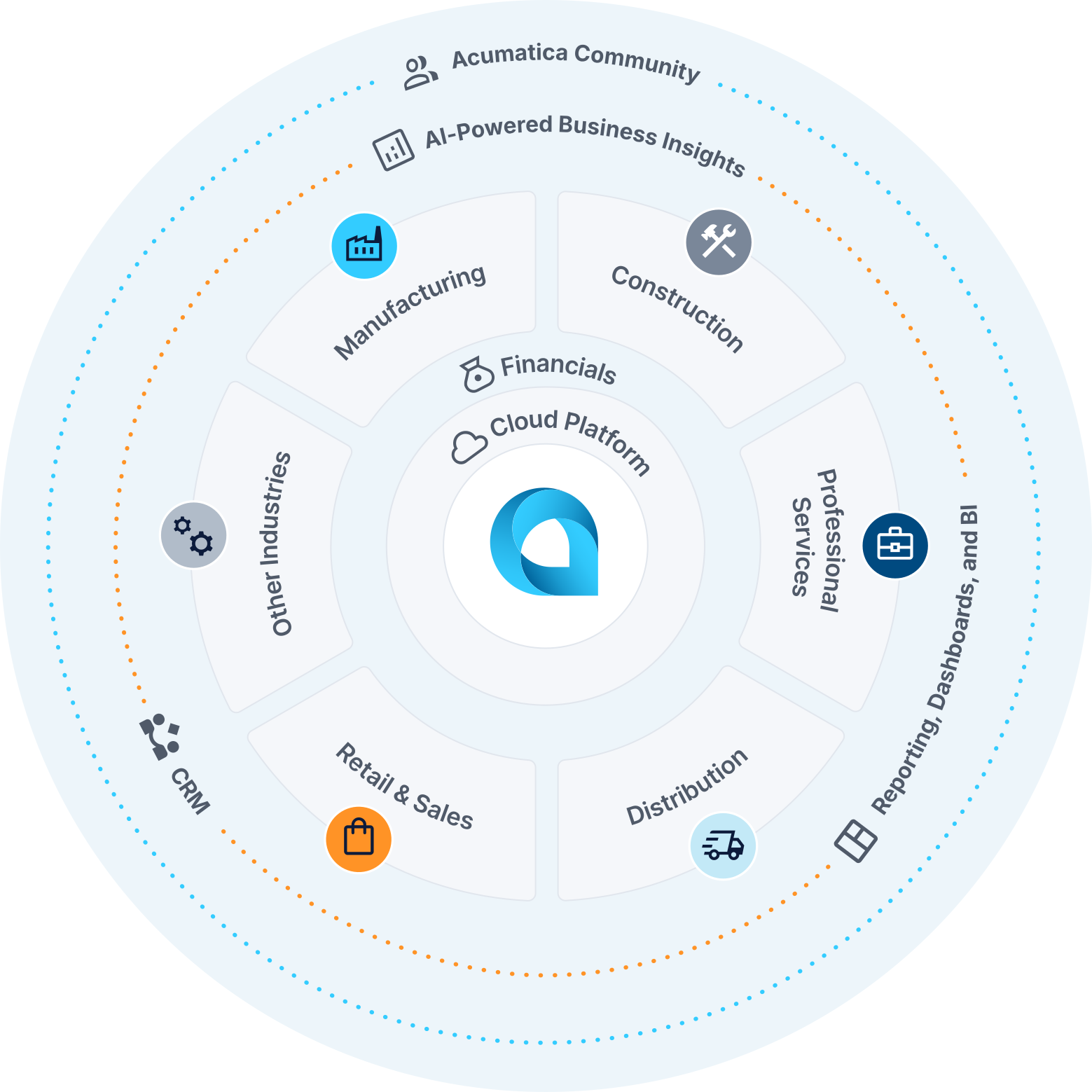
Unify your business management under one roof
Track financials and reporting for an unlimited number of related companies within a single instance. Share charts of accounts, calendars, and currencies to reduce administrative overhead and ensure consistency across your organization.
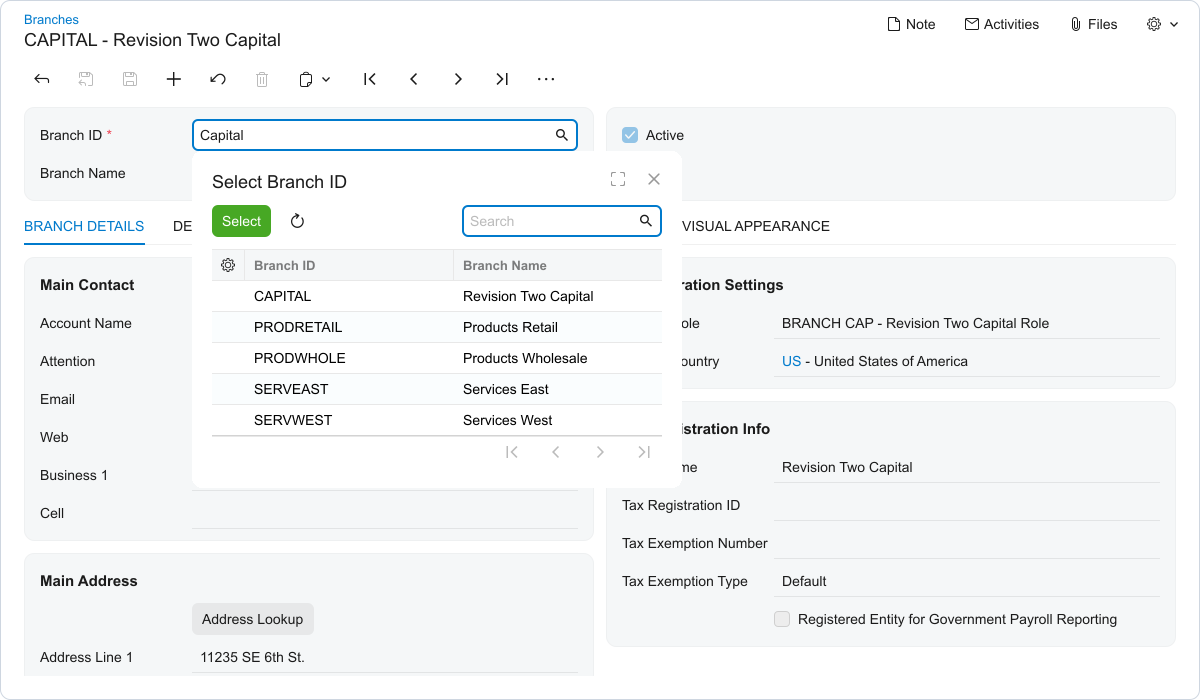
Intercompany transactions
Eliminate manual errors and speed up reconciliation
Automatically create due-to and due-from entries for transactions between related companies to keep accounts balanced and reduce manual reconciliation. Acumatica can also connect operational activity across entities, such as creating a sales order in one company from a purchase order in another and automating related receipts, vendor bills, inventory transfers, and workflows.
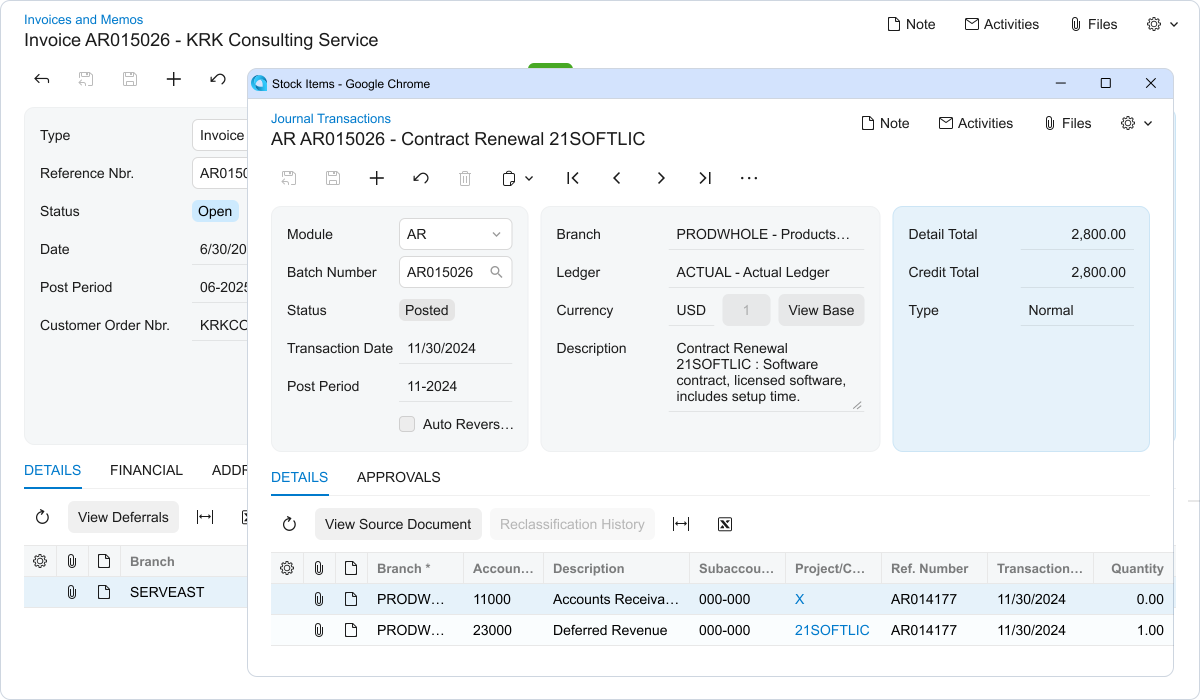
Multicurrency & multilingual
Manage Multiple Currencies and Global Operations
Manage transactions across currencies with exchange-rate support and automatic currency conversion while maintaining accurate financial reporting across entities. Multilingual capabilities and support for selected regional tax and reporting requirements help organizations operate across geographic markets.

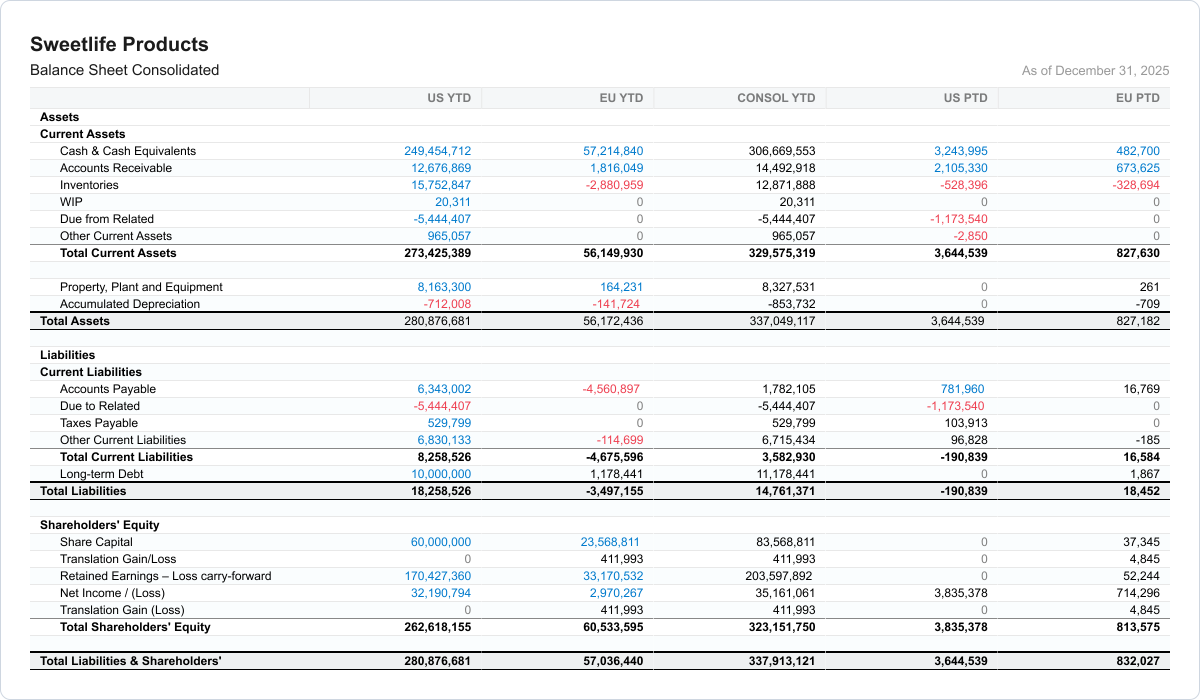
Financial consolidation
Gain instant visibility into group performance
Generate consolidated financial statements across related entities while automatically eliminating intercompany transactions from reports. Finance teams can review organization-wide results and drill down into individual companies for more detailed analysis without manually combining separate financial statements.
Build your perfect demo
Choose the videos that matter most to your financials operations.
Multicompany Financials
General Ledger and Financial Reporting
Revenue Management
Cash Management
Tax Management
Business Intelligence and Analytics
Why Acumatica for multi-entity accounting?
Your ultimate toolkit for modernizing multi-entity financial operations.
Customizable and flexible financial applications
Learn more
Consumption-based licensing
Learn more
Enterprise-grade security
Learn more
Multi-entity accounting knowledge center
Explore integrations, resources, and tools to support your multi-entity accounting needs.
Integrations
Resources
ROI calculator

Marketplace solutions for multi-entity accounting
Extend Acumatica with integrations for tax management, accounts payable automation, analytics, and other financial requirements across multiple entities. Open APIs and prebuilt connectors help finance teams connect specialized applications while maintaining consistent financial processes and data.

Multi-entity resources
Resources for multi-entity and intercompany: Discover essential resources tailored for accounting professionals who manage financial reporting for multiple business entities.

ERP ROI calculator
Calculate the impact of ERP on your warehouse operations and distribution success.
FAQ
What is Multi-Entity Accounting Software?
Multi-Entity Accounting Software helps organizations manage financial activity across multiple companies, subsidiaries, branches, or other business entities. It can centralize accounting processes, automate intercompany transactions, support consolidated financial reporting, and provide visibility into both individual entities and the organization as a whole.
Can Acumatica manage multiple companies in one system?
Yes. Acumatica allows organizations to manage an unlimited number of related companies within one environment. Companies can share settings such as charts of accounts, calendars, and currencies while maintaining their own financial activity and reporting.
How does Acumatica handle intercompany transactions?
Acumatica can automatically create due-to and due-from entries for transactions between related entities, helping keep accounts balanced and reducing manual reconciliation. It can also automate related sales orders, purchase orders, receipts, vendor bills, inventory transfers, and other cross-company workflows.
Can Acumatica consolidate financial statements across entities?
Yes. Finance teams can generate consolidated financial statements across related companies and automatically eliminate intercompany transactions from consolidated reports. Users can also drill down from organization-wide results into individual entity details.
Does Acumatica support multiple currencies?
Yes. Acumatica supports multicurrency transactions, exchange rates, and currency conversions for organizations operating across different markets. These capabilities help companies maintain financial reporting across entities that transact in different currencies.
Can different entities have separate financial controls and reporting?
Yes. Acumatica supports company- and branch-level access controls as well as entity-specific financial processes and reporting. Organizations can restrict access to relevant company information while still supporting centralized accounting and consolidated reporting.






Building the future of business, together.
Simplify accounting, intercompany transactions, and financial reporting across multiple entities with Acumatica.